
The studio
A laboratory, a library, an archive of materials.
Cuento de Hilos began by making small textile pieces. Over time we understood that weaving wasn't the destination: it was the language.
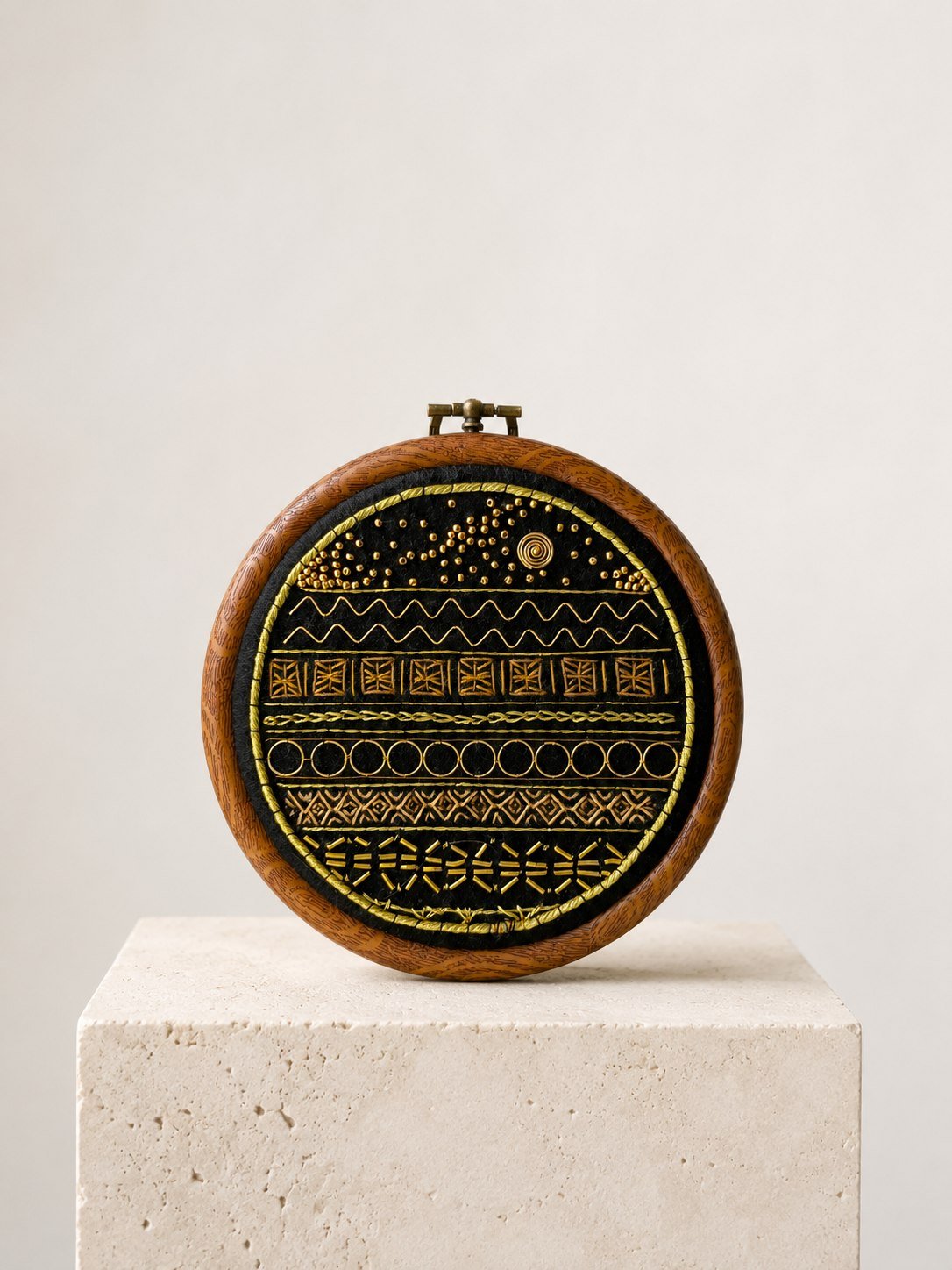
The space
A space where books, fibers, tools, and projects at different stages coexist.
It's not a perfect space, but an authentic one. Uncatalogued materials, visual references, half-finished pieces, and others that have waited years for their moment all coexist here. The studio doesn't separate research from craft: they are the same activity, seen up close or from a distance.
A laboratory, because we test techniques before knowing they'll work. A library, because every piece is born from something read, seen, or remembered. An archive, because documenting is also creating.
Author
Victoria Solís Pauwels
Technical evolution
Three moments, the same question.
There is no leap between “before” and “now”. There is a slow accumulation of technical decisions, each one an answer to the one before it.
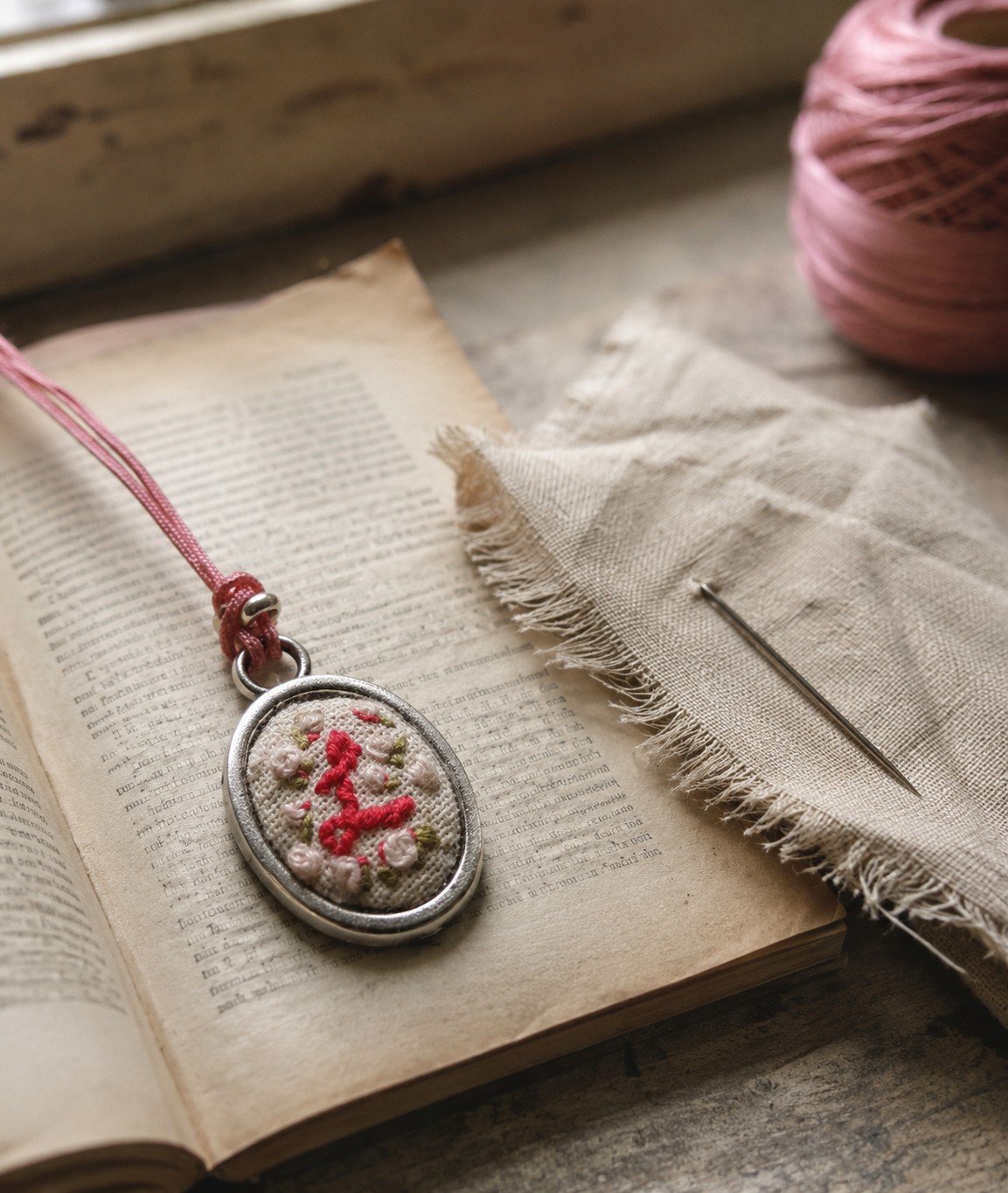
Precision at small scale
The earliest embroideries demanded exactness on minimal surfaces: every stitch had to justify its place before scale could even be considered.
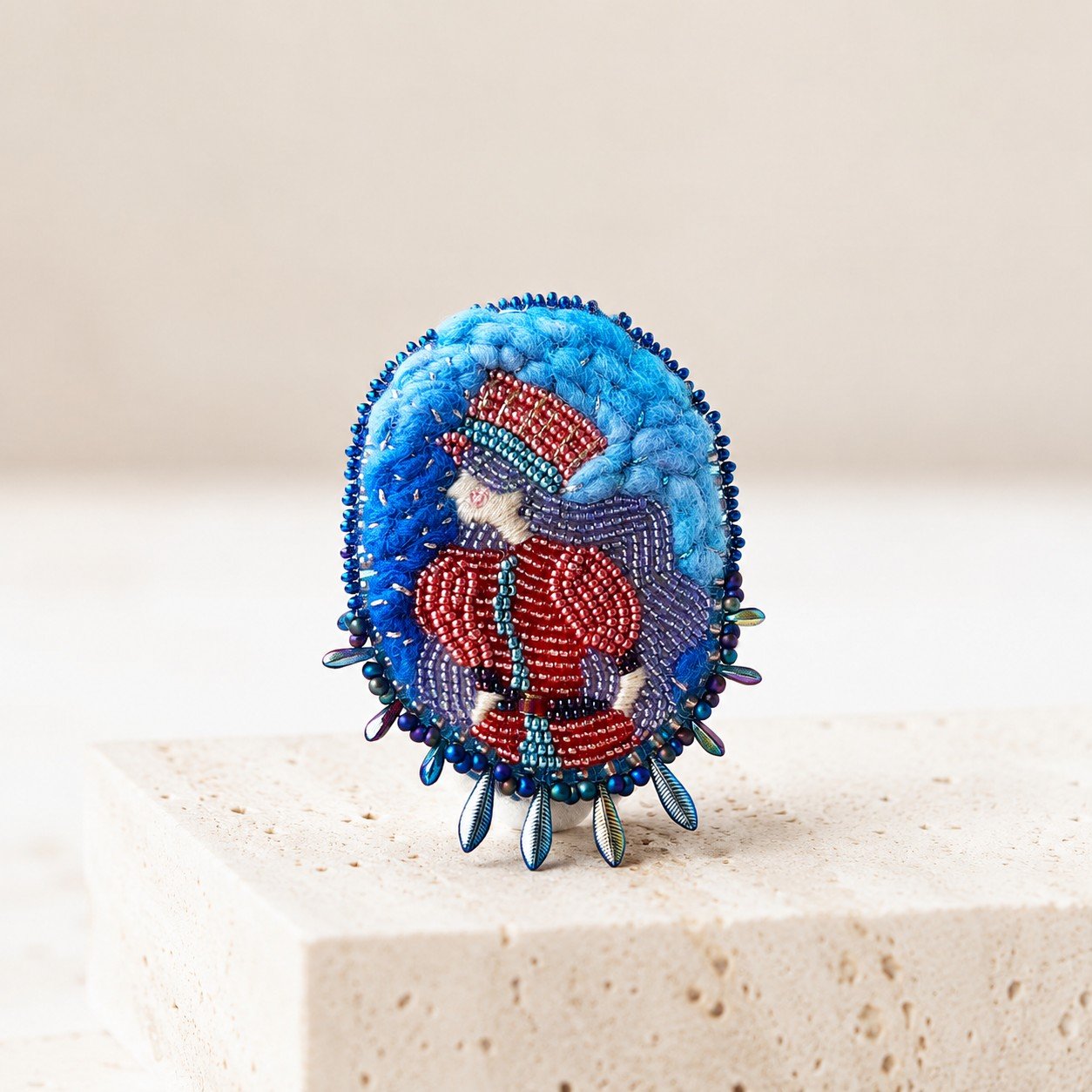
Embroidery gains volume
The surface stops being flat. Thread begins to build relief, and the piece becomes an object before it is an image.
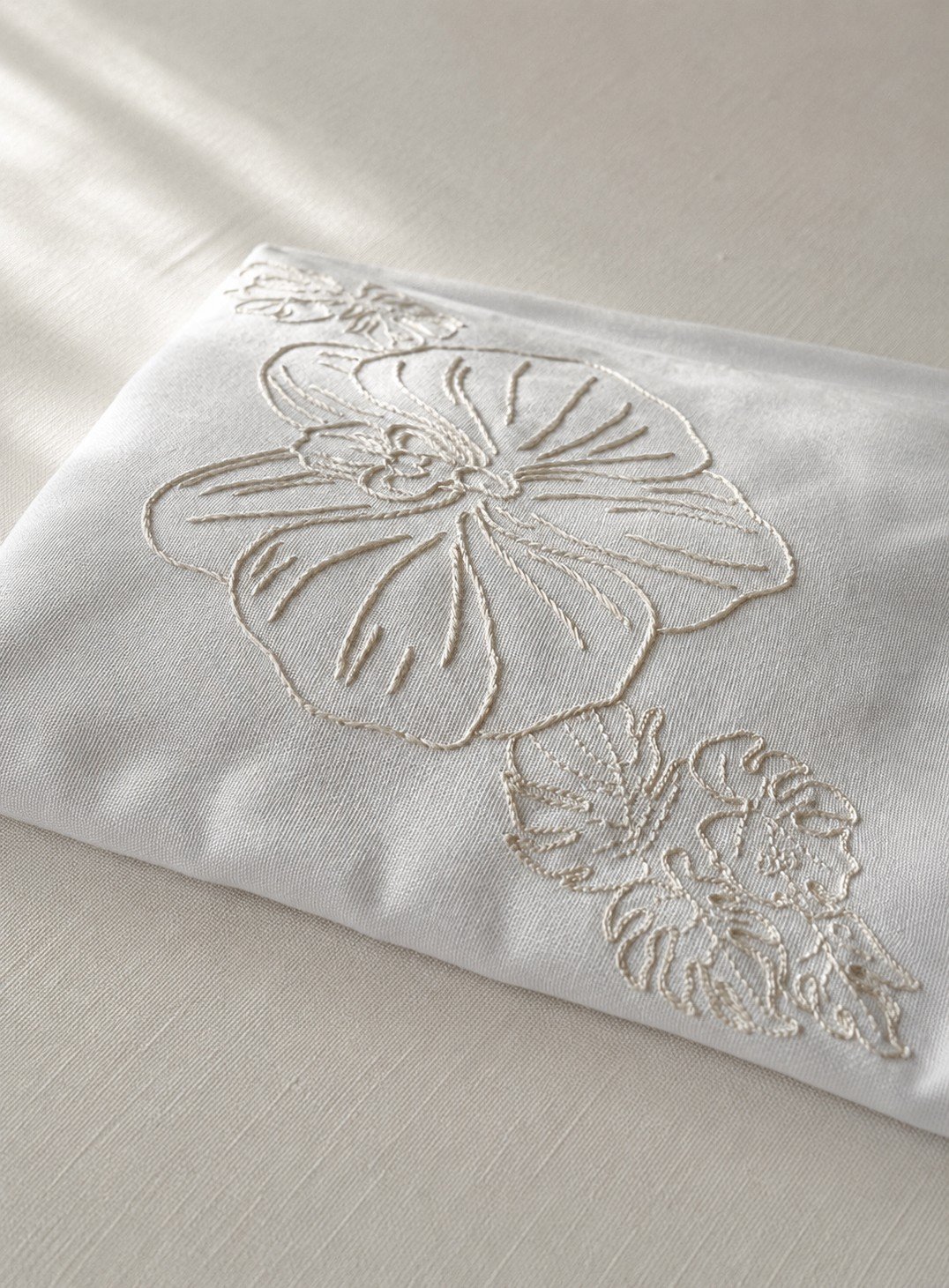
When color is no longer needed
Embroidering white on white strips the technique of its easiest resource. Without color contrast, texture alone has to carry the piece.
Curious about the process behind a specific piece?